©2026 Business Next Media Corp. All Rights Reserved. No.102, Guangfu S. Rd., Da'an Dist., Taipei City 106, Taiwan
LegitApp Brings Trust and Speed to Sneaker and Luxury Authentication
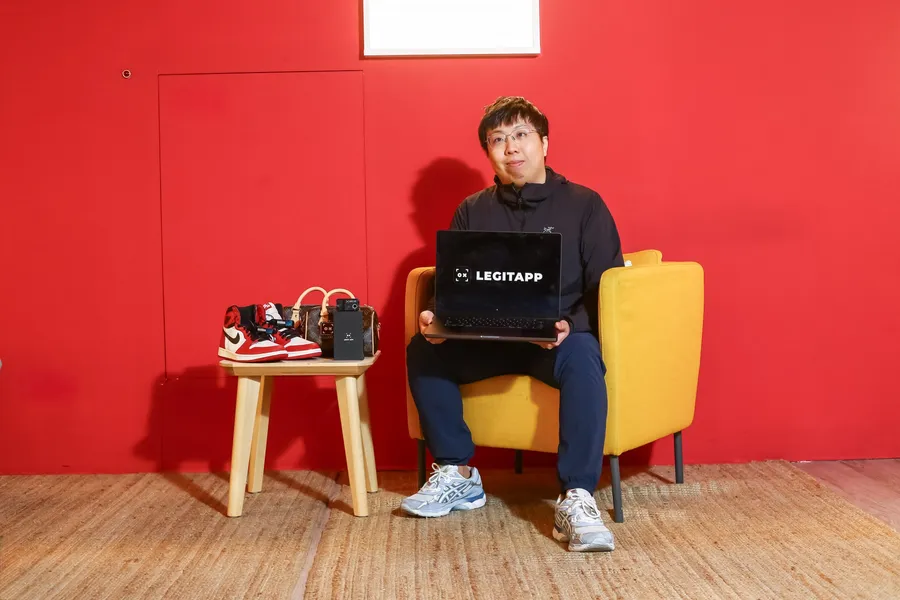
The self-lacing sneakers from "Back to the Future" once sold for fifty thousand dollars at Sotheby’s. For collectors, these are more than shoes; they symbolize a shared culture and passion. But for those following online auctions, the real anxiety often comes from wondering if a prized purchase might turn out to be a fake.
This challenge is at the heart of why KaKit Chen founded LegitApp, a platform dedicated to authenticating luxury goods and sneakers. Before launching LegitApp in 2020, Chen had already built and sold the e-commerce platform Boutir. He returned to entrepreneurship to address a market full of both excitement and counterfeits, aiming to create a transparent standard using a combination of AI and human expertise. In just five years, LegitApp has authenticated three million items, attracted over two million users worldwide, and processes more than three thousand products every day, with major partnerships including PopChill and TikTok.
Science-Driven Authentication and AI Guidance
LegitApp treats authentication as a rigorous process, not a quick glance. Working with the Hong Kong University of Science and Technology, the team developed an AI-powered verification engine. Everything starts with the right photos. Many users do not know how to capture the required details, so the LegitApp platform provides step-by-step guidance in real time. The AI directs users to photograph shoe labels and capture correct angles, making sure every image is clear and suitable before upload.
Once images are uploaded, authentication moves to the next stage. LegitApp uses a hybrid system where two human experts and two AI models review each case. The AI compares user photos with millions of genuine and fake samples, detecting details as subtle as stitching and leather pores. The platform can return a counterfeit risk score in as little as ten minutes. If the risk is high, the system asks for extra close-ups, such as the micro-patterns found on luxury bag chips.
Chen explained, "We guarantee a full refund at the item’s original price if our authentication is incorrect." This confidence is based on an accuracy rate of 99.9 percent. Once both the AI and experts agree, LegitApp issues a tamper-proof digital certificate that serves as proof of authenticity and can help resolve disputes in online sales. As trust grows among individual users, more businesses are choosing LegitApp as a partner.
Making the Secondhand Economy Safer for All
Peer-to-peer and live commerce platforms cannot inspect every product in person, which is why digital authentication is so important. LegitApp now works with leading players like PopChill, Carousell, Whatnot, and TikTok Shop. On PopChill, sellers ship their goods to the company’s office, where staff take detailed photos and submit them to LegitApp for authentication before a final inspection. In the United States, TikTok Shop requires sellers to provide LegitApp’s digital certificate before shipping products to buyers.
Chen shared, "This is an ideal division of work. We are responsible for verifying authenticity, while the platform checks for any damage or stains. Double verification helps buyers feel more secure." The AI can even compare images before and after shipping, such as stitching or shape, to confirm that returns are not fraudulent.
Chen also noted, "If opinions differ about authenticity, our entire team reviews the case and we have an independent audit group for final checks." By analyzing even the smallest features, LegitApp helps resolve disputes quickly and builds trust in the secondhand market.
Focusing on Speed and Core Value
LegitApp’s growth has not been without lessons. Chen observed that in the United States, sneaker deals often happen in person. Initially, the team thought an eight-hour authentication was quick enough, but users were not willing to wait for hours. Realizing that speed is everything in these transactions, the team increased efficiency, cutting wait times to thirty minutes and then launching a ten-minute express service. Meeting this need for speed helped LegitApp reach over three thousand authentications daily and expand to three million users worldwide.
There were also times when LegitApp lost focus by trying to add social networking and fashion-sharing features. "We believed sneaker fans would want to make friends, but those features only raised costs without bringing real value," Chen recalled. In the end, the team removed all non-essential functions and focused on what users truly needed: uploading, paying, and authenticating items.
"We are committed to solving real problems, not just adding flashy extras," Chen emphasized. This dedication to essential services helped LegitApp survive its early challenges and find its place in the market.
Looking ahead, LegitApp plans to offer in-person authentication in Taiwan with a new warehouse in Taoyuan. When buyers and sellers agree on a deal, goods are sent to LegitApp for verification before being shipped to the buyer. "We only handle logistics and authentication, so buyers avoid fakes and sellers are protected from false returns," Chen said.
As LegitApp continues to grow, spreading awareness and business development will be the next challenges. Chen’s journey shows that in the secondhand market, trust is more valuable than traffic. With every digital certificate, LegitApp is helping collectors and buyers worldwide make purchases with confidence.
©2026 Business Next Media Corp. All Rights Reserved. No.102, Guangfu S. Rd., Da'an Dist., Taipei City 106, Taiwan